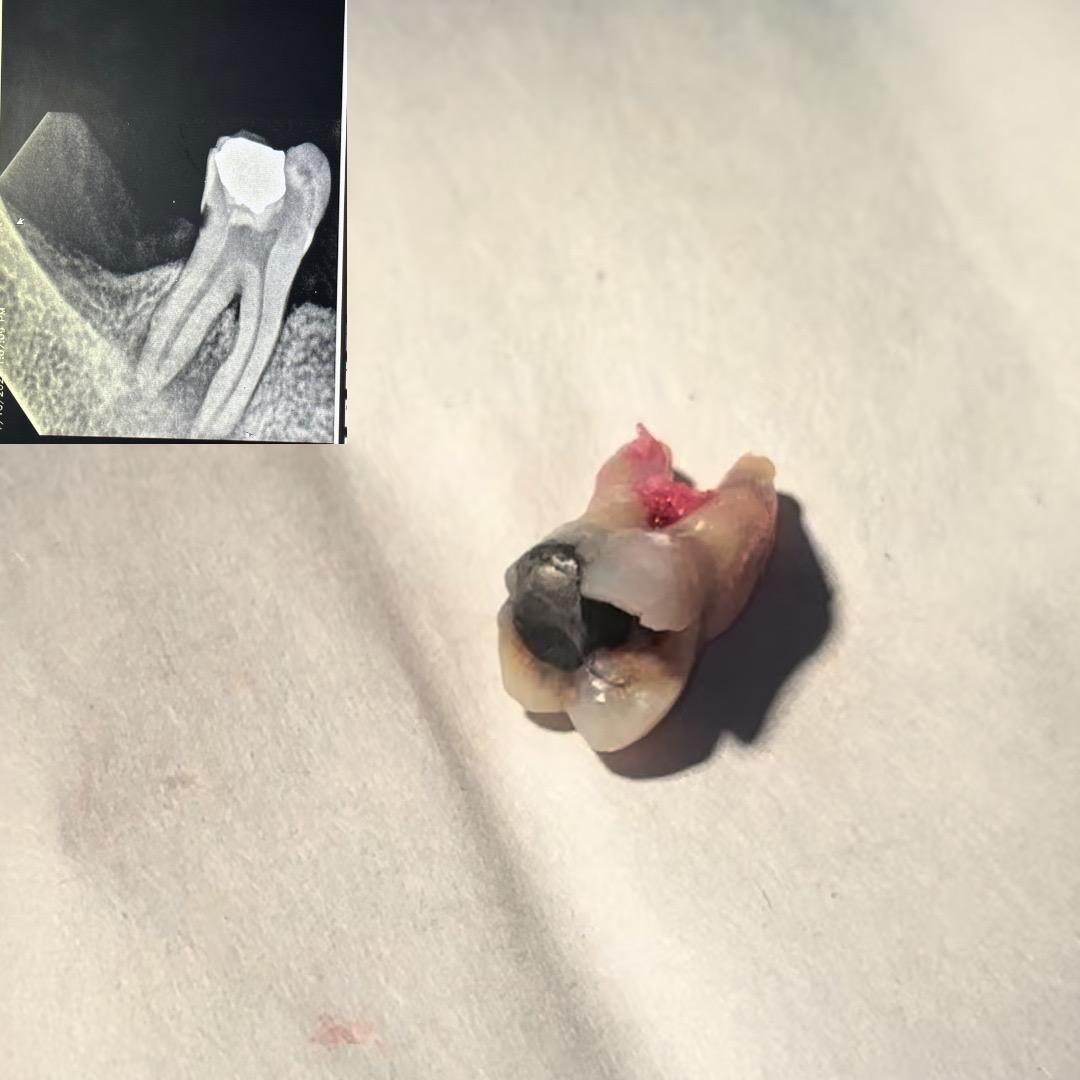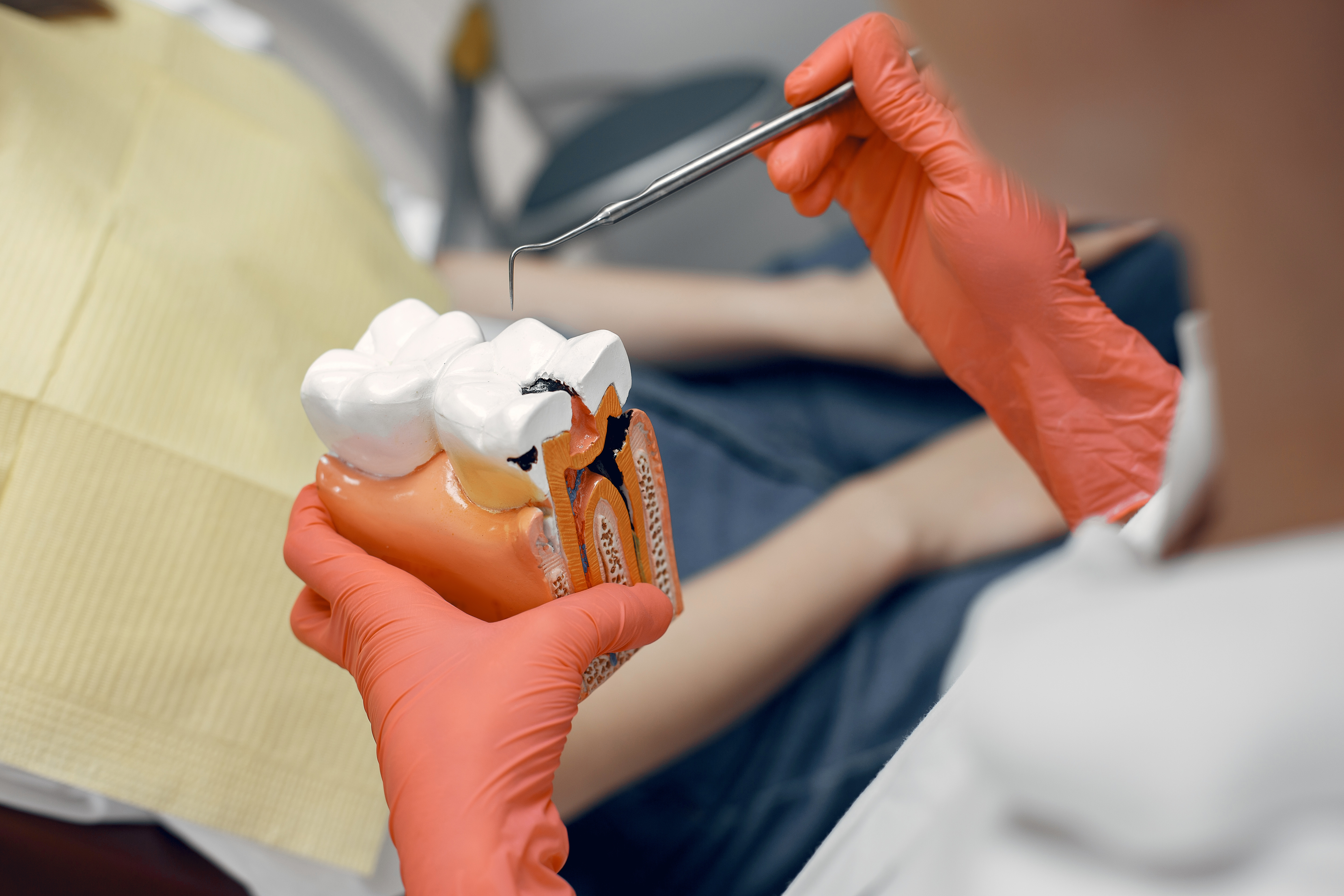
Cavities are caused by acid that bacteria in your mouth produce when they feed on sugars and starches — that acid slowly dissolves the minerals in your tooth enamel until a hole forms. It isn't the sugar itself that rots your teeth, and how often you eat it matters more than how much. In our clinic, the patients most surprised by a new cavity are often the ones who brush well but graze all day, because every nibble restarts an acid attack their enamel never quite gets to recover from.
What actually causes a cavity?
A cavity is a hole in a tooth, and it's the end result of a process called tooth decay, or dental caries. But the hole is the finish line, not the cause. To understand cavities, you have to look at what's happening on the tooth surface long before anything is visible.
It comes down to three things working together: bacteria, fuel, and time. Your mouth is home to a community of bacteria that live in a sticky film called plaque. When you eat sugars or starches, certain plaque bacteria feed on them and release acid as a waste product. That acid sits against the enamel and starts pulling minerals out of it. Do that often enough, for long enough, and the enamel weakens until it finally caves in to form a cavity.
So when people ask what causes cavities, the honest answer is a chain reaction, not a single villain. Sugar gets the blame, but sugar is only the fuel. The real damage is done by acid, produced by bacteria, given enough time to work. Break any link in that chain and you prevent the cavity.
The real culprit: acid, not sugar itself
Here's the part that genuinely surprises people. Sugar never touches your enamel and dissolves it directly. What happens is a step removed: bacteria — chiefly a species called Streptococcus mutans — ferment the sugar and produce acid, mainly lactic acid. That acid is what attacks the tooth.
The threshold that matters is a pH of around 5.5, what dentists call the critical pH. Above it, your enamel is stable. Below it, minerals like calcium and phosphate start leaching out of the enamel surface — demineralisation. Every time you eat or drink something the bacteria can ferment, the plaque pH plunges below that line and an acid attack begins. This is why the worst offenders are sugary and acidic drinks like soda, fruit juice, and energy drinks: they deliver the bacterial fuel and a dose of acid in the same sip.
None of this means sugar is harmless to teeth. It means the mechanism runs through bacteria and acid, and that distinction is the key to prevention. You can't easily remove the bacteria, but you can control how often you hand them fuel — which brings us to the single most useful idea in this whole article.
Why frequency beats quantity
If you take one thing from this piece, make it this: how often you eat sugar matters more than how much. The reason lies in a classic piece of dental science from 1940, often drawn as the "Stephan curve," which mapped what happens to plaque pH after sugar.
The pattern is striking. Within about five to ten minutes of a sugary hit, plaque pH drops below the critical 5.5 and demineralisation begins. It stays in that danger zone for roughly twenty minutes, and then takes another half hour to an hour for saliva to neutralise the acid and bring things back to safe levels. During that whole window, your enamel is losing minerals.
Now picture two people. One drinks a fizzy drink with lunch and is done. The other sips the same drink slowly across the afternoon. The total sugar is identical, but the second person has triggered acid attack after acid attack, keeping their teeth in the danger zone for hours. That's the trap of grazing and constant sipping — and it's exactly why a brilliant brusher who snacks all day can still get cavities. Could anything be more counterintuitive than the idea that when you eat sweets matters more than how many? Yet that's what the science says.
Not sure if that spot is a cavity?
Early decay is painless and easy to miss. Use this guide to understand the warning signs, then see a qualified dentist near you for an exam and X-rays to catch anything before it grows.
The battle inside your mouth
Decay isn't a one-way street. Every day, your enamel goes through a tug-of-war between losing minerals and regaining them — demineralisation versus remineralisation. A cavity only forms when, over time, the losses outweigh the repairs.
Your body's hero in this fight is saliva. It does three quiet, vital jobs: it washes away food and bacteria, it neutralises acid to bring the pH back up, and it carries the calcium and phosphate needed to rebuild softened enamel. This is also why a dry mouth is such a strong risk factor for decay — without enough saliva, the repair side of the battle is badly weakened.
Fluoride is the other great ally, and it works on the same balance. It helps enamel take up minerals again and makes the rebuilt surface more resistant to acid. The practical payoff is genuinely hopeful: the very earliest sign of decay, a chalky "white spot" where minerals have leached out, can often be reversed. With fluoride, better cleaning, and less frequent sugar, that white spot can remineralise before it ever becomes a hole. Once the surface actually collapses into a cavity, though, that door closes — it can't heal itself and needs a filling. The window for reversal is real, but it's early.
The stages of tooth decay
Decay doesn't happen all at once; it moves through the tooth in stages, getting harder to treat at each one. Knowing the progression explains why early check-ups matter so much — and why waiting for pain is a poor strategy.
| Stage | What's happening | What you'd notice |
|---|---|---|
| 1. White spot | Enamel losing minerals; surface still intact | A chalky white mark; no pain — and still reversible |
| 2. Enamel decay | Surface breaks down; a hole begins | A visible pit; spot may turn brown; often still painless |
| 3. Dentine decay | Decay reaches the softer layer beneath enamel | Sensitivity to sweet, hot, or cold; decay now spreads faster |
| 4. Pulp involvement | Decay reaches the nerve; possible infection | Toothache, lingering pain, sometimes swelling |
The crucial thing to grasp is that the first two stages are usually painless. Decay is silent until it gets deep, which is exactly why so many people are caught off guard. Once it reaches the dentine, you may notice sensitivity — our guide on sharp versus lingering tooth sensitivity explains what different sensations can mean. By the time decay reaches the pulp, you may get a genuine toothache or pain on biting, covered in our piece on tooth pain when biting down. Left further, the nerve can become infected, sometimes needing root canal treatment, with its own warning signs to watch for.
Who's most at risk?
Cavities aren't handed out at random. Some people and some teeth are simply more vulnerable, and recognising where you sit helps you target your prevention.
- Frequent snackers and sippers, who keep their teeth in the acid danger zone for much of the day.
- People with a dry mouth, whether from medications, certain medical conditions, mouth-breathing, or simply not drinking enough water — less saliva means less repair.
- Deep grooves on back teeth, where the toothbrush can't reach into the fissures and plaque hides.
- Exposed roots, common as gums recede with age; root surfaces are softer than enamel and decay more easily.
- Edges of old fillings and crowns, where new decay can sneak in at the margins.
- Anyone with infrequent cleaning between teeth, since cavities love the contact points a brush never touches.
It's worth being honest about genetics here, because people often blame "soft teeth." There is a small element of individual susceptibility — saliva quality and tooth shape vary between people. But cavities are overwhelmingly a behaviour-and-environment disease, not a fixed genetic fate. The factors above are far more powerful than your DNA, which is genuinely good news: it means decay is largely within your control.
How to actually prevent cavities
The prevention follows directly from the cause. You're trying to do three things: feed the bacteria less often, strengthen the enamel, and help saliva do its job. Here's what genuinely moves the needle.
- Brush twice a day with fluoride toothpaste. This is the single most effective everyday step. Strong evidence from Cochrane reviews shows fluoride toothpaste meaningfully reduces decay compared with non-fluoride, and a spit-don't-rinse finish leaves protective fluoride behind.
- Clean between your teeth daily, with floss or interdental brushes, to reach the surfaces decay starts on.
- Cut the frequency of sugar, not just the amount. Keep sweets and sugary drinks to mealtimes rather than grazing, and choose water between meals.
- Consider dental sealants, thin protective coatings over the grooves of back teeth — a simple, evidence-backed way to shield the spots a brush can't clean. You can read about them on our dental sealants page.
- Ask about professional fluoride varnish, which research shows can cut decay significantly when applied regularly.
- Keep saliva flowing by staying hydrated, and see your dentist for regular check-ups so early decay is caught and, where possible, reversed.
And when a cavity has already formed, it needs a filling to clean out the decay and seal the tooth before it spreads deeper. Catching it small keeps that repair small.
Cavity myths worth busting
A few myths quietly sabotage people's teeth, so let's set them straight.
"Sugar rots your teeth directly."
It doesn't. Bacteria turn sugar into acid, and the acid is what dissolves enamel. And because frequency drives the damage, one chocolate bar with a meal is gentler on your teeth than sipping a sugary drink all afternoon.
"Only children get cavities."
Adults get them too, often on exposed roots as gums recede, or around the edges of old fillings. Dry mouth from medication makes the risk climb with age, not fall.
"If it doesn't hurt, there's no cavity."
Early decay is painless. By the time a tooth aches, the decay is usually deep. Waiting for pain almost guarantees a bigger problem and a bigger repair.
"Sugar-free drinks are safe for teeth."
Many are still acidic enough to erode enamel directly, even without sugar feeding the bacteria. "Diet" doesn't always mean tooth-friendly.
Decay is a balance you can tip
Strip away the myths and a cavity is simply the outcome of a balance that tipped the wrong way — too much acid, too often, with too little repair in between. That's oddly reassuring, because every part of it is something you can influence: how often you feed the bacteria, how well you clean, how much fluoride and saliva are on your side. Tip the balance back toward repair, and most cavities simply never get the chance to form.
Frequently asked questions
What is the main cause of cavities?
Cavities are caused by acid that mouth bacteria produce when they feed on sugars and starches in dental plaque. That acid dissolves minerals from tooth enamel, and over repeated attacks a hole forms. It's the bacterial acid, not the sugar directly, that damages the tooth.
Does sugar cause cavities?
Sugar fuels the bacteria that make cavity-causing acid, so it plays a major role, but indirectly. Crucially, how often you eat sugar matters more than how much. Each sugary snack or sip triggers an acid attack lasting around twenty minutes, so frequent grazing is worse for teeth than the same sugar eaten at once.
Can you reverse a cavity?
Very early decay can be reversed. At the white-spot stage, before a hole forms, fluoride, good brushing, and less frequent sugar can remineralise the enamel. Once the surface actually breaks down into a cavity, it can't heal on its own and needs a filling. That's why early detection matters so much.
Why do I get cavities even though I brush?
Brushing alone may miss the gaps between teeth and deep grooves where decay starts, and frequent snacking, sugary drinks, or a dry mouth can overwhelm even good brushing. Skipping flossing, not using fluoride toothpaste, or grazing all day are common reasons cavities still form despite regular brushing.
Do cavities hurt?
Not at first. Early cavities are usually painless, which is why they're easy to miss. Pain or sensitivity to sweet, hot, or cold usually appears once decay reaches the softer dentine, and a deep ache often means it's near the nerve. Regular check-ups catch cavities before they hurt.
How can I prevent cavities?
Brush twice daily with fluoride toothpaste, clean between your teeth, and limit how often you have sugary or acidic foods and drinks. Stay hydrated to keep saliva flowing, consider dental sealants on grooved back teeth, and see your dentist regularly so early decay is caught and treated.
Can adults get cavities?
Yes. Cavities aren't only a childhood problem. Adults are prone to decay too, especially on exposed roots when gums recede with age, around the edges of old fillings, and when dry mouth from medications reduces saliva. Good habits and regular dental visits matter at every age.
Prevention beats every filling
The cheapest cavity is the one you never get. Build the habits above, consider sealants for grooved teeth, and see a qualified dentist near you for regular checks that catch decay early.
References
- American Dental Association — MouthHealthy. "Cavities / Tooth Decay." mouthhealthy.org/all-topics-a-z/cavities
- National Health Service (UK). "Tooth decay." nhs.uk/conditions/tooth-decay
- Walsh T, Worthington HV, Glenny AM, et al. "Fluoride toothpastes of different concentrations for preventing dental caries." Cochrane Oral Health Review, 2019. cochranelibrary.com
- Marinho VCC, et al. "Fluoride varnishes for preventing dental caries in children and adolescents." Cochrane Oral Health Review. (caries reductions of ~37–43%)
- World Health Organization. "Guideline: Sugars intake for adults and children." (free sugars and dental caries) who.int
- Cleveland Clinic. "Cavities (Tooth Decay): Symptoms, Causes & Treatment." my.clevelandclinic.org/health/diseases/10946-cavities

Dr. Sarwar Naseer
A capable young dentist known for gentle, painless treatment and aesthetic dentistry. PMDC-registered, trained at Akhtar Saeed Medical & Dental College, and focused on comfortable patient care.
View full profile →
Dr. Uzair Ahmed
A prosthodontist with 12+ years of experience and an established name in restorative and prosthetic dentistry in Lahore. PMDC-registered, with FCPS specialisation from CMH Lahore Medical College.
View full profile →