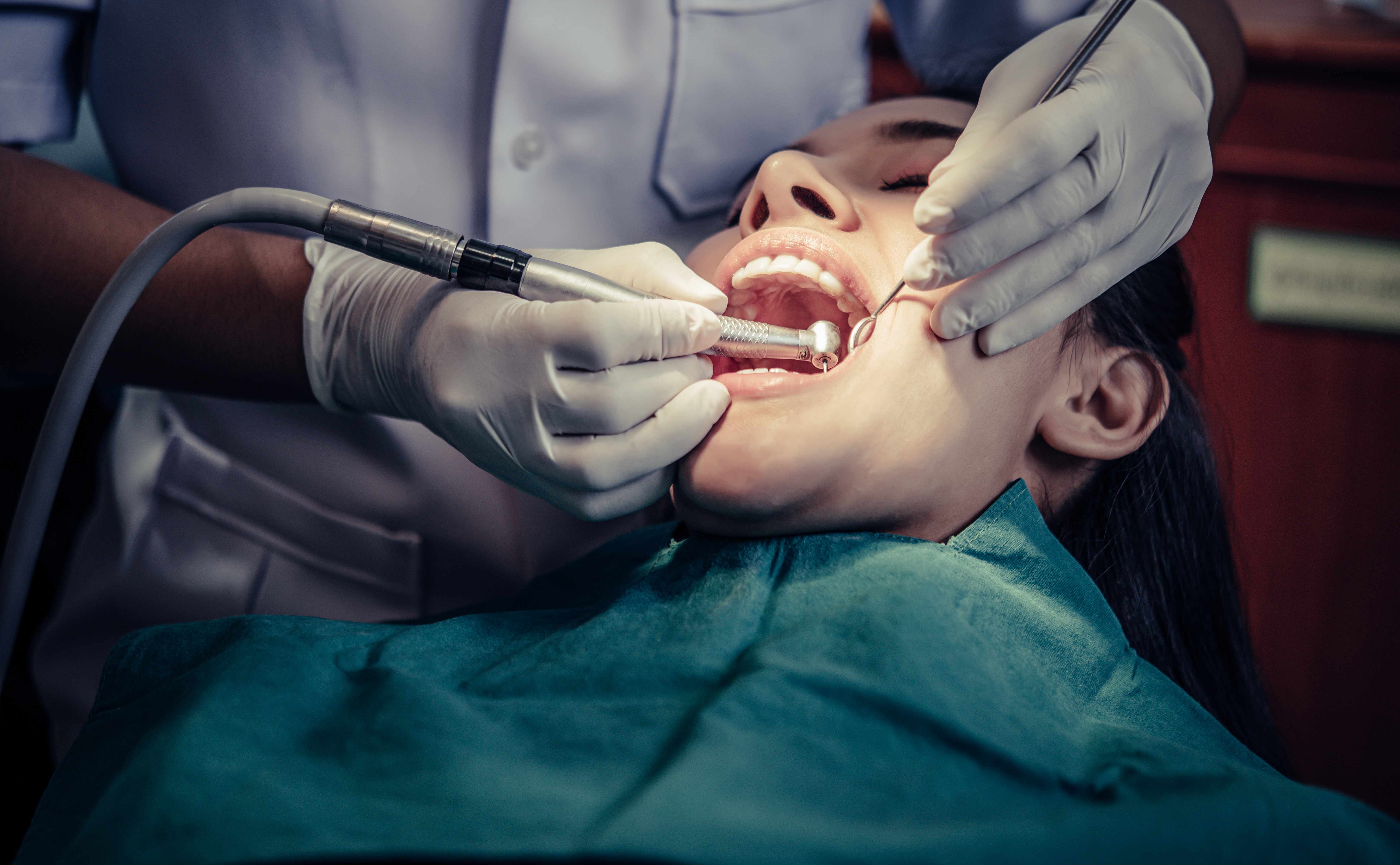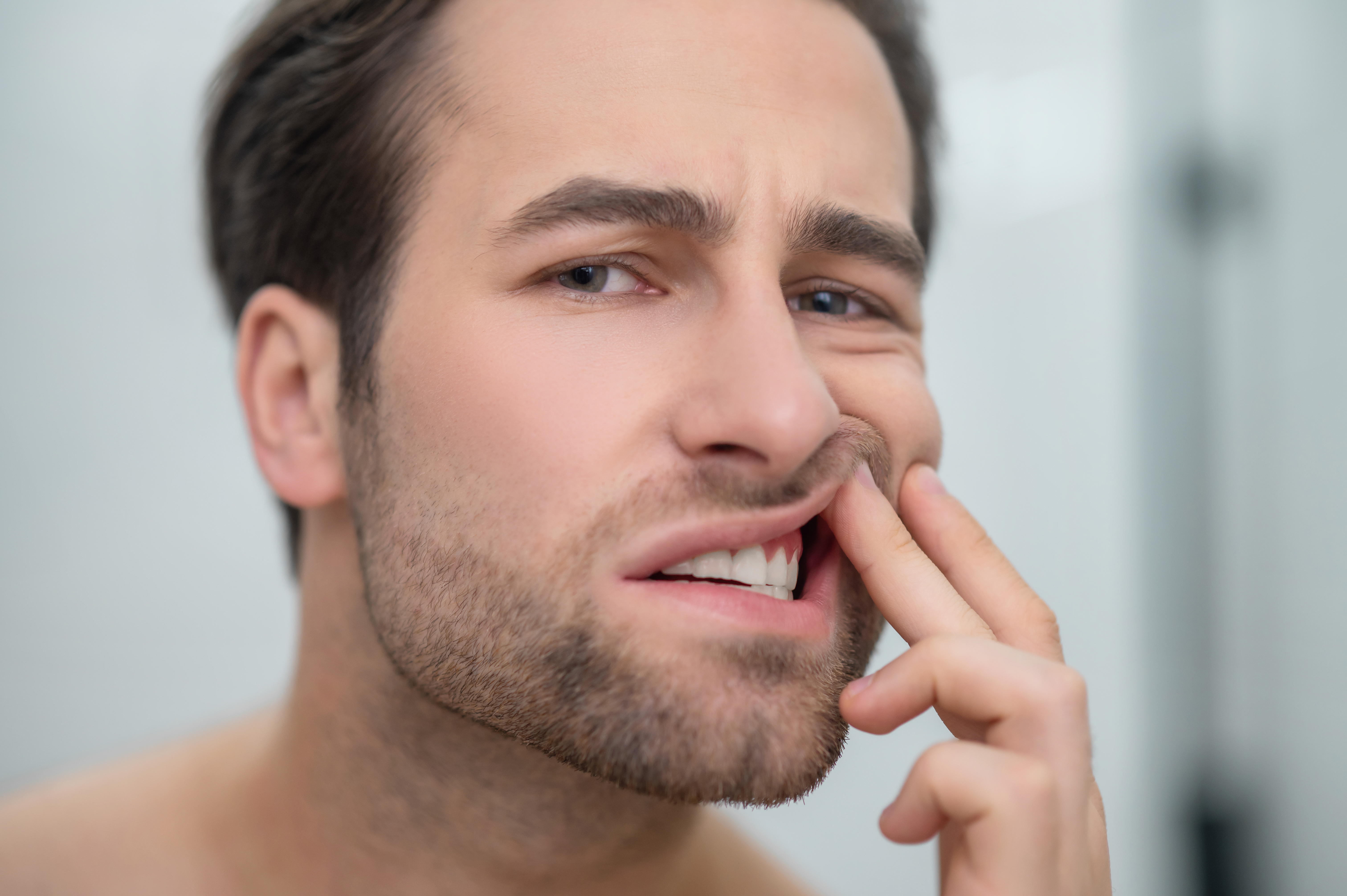
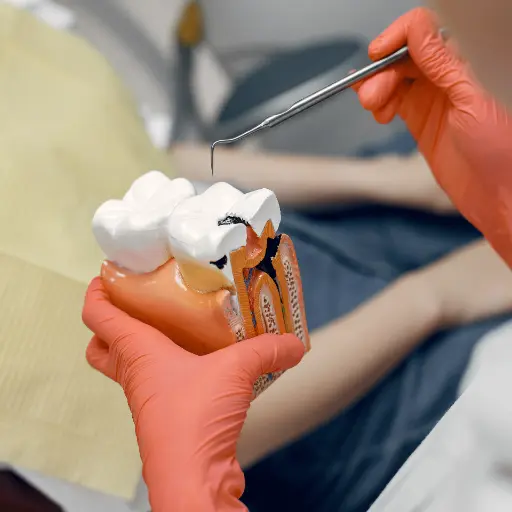
The clearest warning sign of infection after a root canal is pain that worsens after the first few days instead of settling, especially when it comes with swelling, a pimple-like bump on the gum, pus, or a bad taste. Some soreness in the first day or two is completely normal and expected. The problem is the wrong direction of travel: discomfort that climbs rather than fades, or pain that returns weeks or years after the tooth had gone quiet. The reassuring backdrop is that root canals are highly successful, research pooling long-term outcomes puts tooth survival after treatment at roughly 86 to 93 percent over a span of two to ten years. In our clinic, the patients who do best are the ones who understand what normal healing feels like, because then a genuine warning sign stands out instead of getting lost in ordinary post-treatment tenderness.
What's normal after a root canal?
Some discomfort after a root canal is not a complication, it's expected. The procedure involves cleaning inside the tooth and right at the tip of the root, and the tissue immediately around that root tip gets irritated in the process. So a degree of tenderness, particularly when you bite on the tooth, is part of normal healing.
The shape of that discomfort matters more than its presence. Post-treatment pain tends to be at its most noticeable in the first day, often peaking within about 24 hours, and then declines steadily. By around a week, studies suggest only roughly one in ten people still report any meaningful pain. A small number of people get what dentists call a flare-up, a sharper spike of pain or swelling in the first few days, which one large review found occurred in just under 10 percent of cases. A flare-up feels alarming, but it's an acute inflammatory event during healing, not proof the treatment has failed, and it usually settles within a week.
What you can take from this: short-lived, improving soreness is the normal script. If your experience matches that downward curve, you're very likely healing as expected. If you want a fuller picture of the procedure itself, our root canal treatment page walks through what's involved.
The warning signs of infection
These are the changes that shift the picture from "normal healing" to "get this checked." No single one is a diagnosis on its own, but each is worth a call to your dentist.
Pain that worsens or returns
Pain that climbs after the first few days, rather than easing, or pain that comes back after the tooth had settled, is the single most common warning sign. Sharp, throbbing pain that doesn't respond to ordinary painkillers is especially worth attention.
Swelling of the gum or face
Swelling around the treated tooth, along the jaw, or in the face suggests an abscess or active infection. Unlike the brief tenderness of normal healing, this tends to grow rather than shrink.
A pimple-like bump on the gum
A small bump near the tooth, sometimes oozing pus, is a classic sign of infection draining through the gum. It may not even hurt, which can be misleading, but it's a clear signal that bacteria are active.
Pus, drainage, or a persistent bad taste
A foul taste that won't shift, bad breath localised to the area, or any pus draining near the tooth points to infection in the surrounding tissue.
Fever or feeling unwell
A fever, swollen glands, or unusual fatigue alongside dental symptoms can mean an infection is becoming more than local. This combination always deserves prompt attention.
| Sign | What it may suggest | How urgent |
|---|---|---|
| Pain worsening after day 3 | Persistent or new infection | See a dentist promptly |
| Growing gum or facial swelling | Abscess / active infection | See a dentist promptly |
| Gum bump / pimple with pus | Draining infection (abscess) | Book a review soon |
| Persistent bad taste / pus | Infected tissue | Book a review soon |
| Fever + facial swelling | Possible spreading infection | Urgent / same-day care |
Worried your root canal isn't healing right?
Use this guide to tell normal soreness from a warning sign, then book an in-person check with a qualified dentist near you. Persistent or worsening symptoms always deserve a proper exam.
Normal soreness vs infection: the key differences
If you remember one principle from this whole article, make it this: watch the direction, not the snapshot. Normal post-treatment soreness and an infection both involve discomfort, so a single painful moment tells you very little. What separates them is how things change over days.
Normal healing improves. Soreness peaks early, usually in the first day or so, and then fades a little more each day until it's gone within a week or two. Infection does the opposite: it tends to worsen, or it eases at first and then turns around and comes back. A bad taste, a gum bump, a fever, or visible swelling are extras that normal healing simply doesn't produce. So tenderness on biting that's slowly improving on day four is reassuring; pain that's sharper on day four than day two, especially with any swelling, is not.
There's a timing clue too. With infection, symptoms often appear or escalate around several days to a week out, sometimes after you'd started to feel fine, which is exactly the moment people let their guard down. Bleeding or oozing pus, a swelling that's visibly growing, and any spread toward the cheek or jaw all belong firmly in the "get it checked" column rather than the "wait and see" one.
Why a treated tooth can still get infected
It can feel unfair: you had the infection treated, so why would it come back? The honest answer is that a root canal is a very good treatment, not a perfect seal against the future, and a few specific things can let bacteria back in.
The most common culprit is the restoration on top. After a root canal, the tooth needs a durable, well-sealing filling or crown, and it needs it reasonably promptly. If that final restoration is delayed, leaks, cracks, or wears down over time, bacteria from saliva can seep back into the canal system and re-establish an infection, sometimes years later. This is genuinely one of the most important and most overlooked parts of the whole process: the root canal and the restoration are a team, and a beautifully cleaned canal under a failing crown is still vulnerable. Our page on crowns and bridges explains how these restorations protect a treated tooth.
Other causes include a tooth that develops a crack, complex or curved canals that are difficult to fully clean and seal, or an extra canal that wasn't found at the first attempt. None of these reflect carelessness, teeth are biologically intricate, and some are simply harder than others. They're a reason that follow-up and a good restoration matter, not a reason to fear the procedure.
The myth: persistent pain doesn't always mean failure
Here's where a lot of well-meaning advice gets it wrong, and where the evidence is genuinely surprising. If a treated tooth keeps hurting, the instinctive assumption, by patients and sometimes by clinicians, is that the root canal failed and needs redoing. But that assumption can be a mistake.
A systematic review and meta-analysis looking at lingering pain after root canal therapy found that roughly half of persistent tooth pain cases didn't actually originate from the treated tooth at all. The pain was non-odontogenic, coming from somewhere else, most often referred pain from the jaw muscles or temporomandibular joint, and occasionally a nerve-related pain disorder. Why does this matter so much? Because if the pain isn't coming from the tooth, redoing the root canal won't fix it, and you'd be putting a healthy treated tooth through an unnecessary second procedure.
This is exactly why a careful diagnosis comes before any decision to retreat. Persistent pain after a root canal is a reason to investigate properly, with examination and X-rays, not a reason to assume the worst and rush back into treatment. It's also a fair acknowledgement of a real limitation: dental pain can be genuinely difficult to pin down, and a good clinician treats lingering pain as a question to answer rather than a verdict already reached.
When it's an emergency
Most infections after a root canal are uncomfortable but manageable with a timely appointment. A small set of signs, though, mean you shouldn't wait for a routine slot.
Seek urgent or emergency care, rather than waiting, if you have:
- Swelling that's spreading rapidly and starting to affect your ability to swallow or breathe.
- Swelling pushing toward or closing the eye.
- A high fever alongside facial swelling, with feeling genuinely unwell, shivery, or confused.
- Swelling spreading down toward the neck.
These point to an infection that may be spreading beyond the local area, which is uncommon but serious, and the right response is prompt medical attention rather than another night of painkillers. The same escalation logic applies to dental swelling generally, and our guide on when a swollen face from a tooth is an emergency goes into these warning signs in more detail.
What a dentist can do about it
What happens next depends on the cause, which is why diagnosis comes first. If the tooth itself is reinfected, the usual options are retreatment, where the previous root filling is removed and the canals are cleaned and sealed again, or in some cases a small surgical procedure at the root tip called an apicoectomy. Encouragingly, most reinfected root-canal teeth can be successfully retreated and kept. If the tooth is too damaged or cracked to save, extraction may be the realistic option, after which replacement can be considered.
A common question is whether antibiotics will sort it out. On their own, no. Antibiotics may help control a spreading infection or ease symptoms temporarily, but they can't reach the bacteria sealed inside the tooth, so they don't resolve the underlying problem. A dentist may prescribe them in certain situations as part of managing an infection, particularly where there's spreading swelling or systemic involvement, but that's a clinical judgement made at the chair, not something to self-direct or self-medicate. The definitive fix is nearly always a procedure, not a pill.
Protecting your root canal long-term
Most of what keeps a treated tooth healthy is unglamorous and entirely within reach. Get the recommended final restoration, the permanent filling or crown, placed promptly rather than living with a temporary for months, because that seal is what keeps bacteria out. Clean the tooth well every day, just as you would any other. Keep your regular dental reviews, since a dentist can spot a failing restoration or an early problem on an X-ray long before you'd feel anything. And take new symptoms on a long-settled tooth seriously rather than assuming a root-canalled tooth can't cause trouble, because it can. A treated tooth that's properly restored and looked after has every chance of lasting many years, the cases that come unstuck are usually the ones where the restoration was neglected or a warning sign was waited out for too long. If discomfort on a treated tooth ever has you wondering whether it's the tooth or something else, that uncertainty itself is a good reason to get it looked at, and our piece on gum pain when the tooth looks fine covers a related source of confusion.
Frequently asked questions
How long is pain normal after a root canal?
Mild to moderate soreness, especially when biting, is normal and usually peaks in the first day or two then settles over several days to a week. Pain that worsens after the first few days, or sharp pain that doesn't ease with ordinary painkillers, is the pattern that suggests a problem.
What are the signs of infection after a root canal?
Warning signs include pain that returns or worsens after initially improving, swelling of the gum or face, a pimple-like bump on the gum that may leak pus, a persistent bad taste, fever, and tenderness that doesn't settle. Any of these warrant a prompt dental check.
Can a root canal get infected years later?
Yes. A treated tooth can become reinfected months or years later, often because a crown or filling seal has failed, the tooth has cracked, or bacteria were left in complex canals. New pain, swelling, or a gum bump on a long-settled tooth should always be assessed.
Can antibiotics cure an infected root canal?
No. Antibiotics may control symptoms or limit a spreading infection temporarily, but they cannot reach bacteria sealed inside the tooth. Resolving the infection usually needs a dental procedure such as retreatment, root-tip surgery, or extraction. A dentist decides whether antibiotics have any role.
Does persistent pain after a root canal mean it failed?
Not necessarily. Research suggests roughly half of lingering tooth pain after a root canal does not actually come from the treated tooth, often it's referred jaw-muscle or nerve pain. This is why a careful diagnosis matters before assuming the root canal failed and redoing it.
When is an infected root canal an emergency?
Seek urgent care if swelling spreads rapidly and affects your ability to swallow or breathe, pushes toward the eye, or comes with a high fever and feeling very unwell. These uncommon signs mean an infection may be spreading and need same-day or emergency attention.
Don't wait out a warning sign.
An infected root canal is far more treatable when seen early. If a treated tooth is showing any of these signs, book an in-person review with a qualified dentist near you.
References
- Ng YL, Mann V, Gulabivala K. Tooth survival following non-surgical root canal treatment: a systematic review of the literature. International Endodontic Journal. 2010 Mar;43(3):171–189. doi:10.1111/j.1365-2591.2009.01671.x.
- Nixdorf DR, Moana-Filho EJ, Law AS, McGuire LA, Hodges JS, John MT. Frequency of nonodontogenic pain after endodontic therapy: a systematic review and meta-analysis. Journal of Endodontics. 2010 Sep;36(9):1494–1498. doi:10.1016/j.joen.2010.06.020.
- Nixdorf DR, Moana-Filho EJ, Law AS, McGuire LA, Hodges JS, John MT. Frequency of persistent tooth pain after root canal therapy: a systematic review and meta-analysis. Journal of Endodontics. 2010 Feb;36(2):224–230. doi:10.1016/j.joen.2009.11.007.
- Ng YL, Mann V, Rahbaran S, Lewsey J, Gulabivala K. Outcome of primary root canal treatment: systematic review of the literature – Part 2. Influence of clinical factors. International Endodontic Journal. 2008 Jan;41(1):6–31. doi:10.1111/j.1365-2591.2007.01323.x.
- American Association of Endodontists. Endodontic (root canal) retreatment and post-treatment patient information. Available at: https://www.aae.org/patients/ (accessed June 2026).
- Cleveland Clinic. Root Canal: Procedure, Recovery & Aftercare. Available at: https://my.clevelandclinic.org/health/treatments/21759-root-canal (accessed June 2026).

Dr. Sarwar Naseer
A PMDC-registered dental surgeon known for gentle, comfort-focused care, with a particular interest in helping patients understand what's normal during recovery and what isn't.
View full profile →
Dr. Uzair Ahmed
A prosthodontist with 12+ years in restorative and prosthetic dentistry in Lahore, with deep expertise in the crowns and restorations that protect root-canal-treated teeth for the long term.
View full profile →