A root canal is a procedure that removes infected or inflamed pulp from inside a tooth, then cleans, fills, and seals the space — saving a tooth that would otherwise need to be pulled. It's done under local anaesthetic, usually across one or two visits, and most people are surprised by how routine and pain-free it feels compared with what they imagined. In our clinic, the biggest hurdle is rarely the treatment itself. It's the dread patients walk in with, almost always from something they read online rather than something a dentist actually told them.
What is a root canal, and why might you need one?
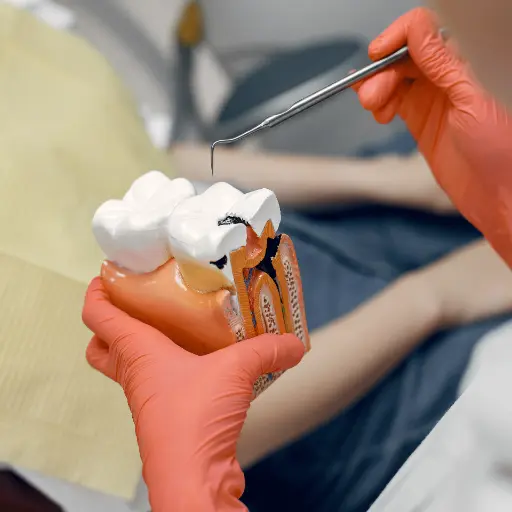
Inside every tooth, beneath the hard enamel and dentine, sits a soft core called the pulp — a bundle of nerves, blood vessels, and connective tissue running down through the roots. When that pulp becomes inflamed or infected, it can't repair itself, and the result is often the kind of pain people don't forget.
A few things commonly damage the pulp: deep decay that reaches the nerve, a cracked or chipped tooth, a knock or injury, or repeated dental work on the same tooth over the years. Once bacteria get in, the pulp can die, and infection can spread toward the tip of the root, sometimes forming an abscess. A root canal removes that damaged tissue and disinfects the space so the tooth can stay in your mouth and keep doing its job.
How do you know it might be coming? The warning signs include lingering sensitivity to hot or cold, a deep ache, pain when you bite down, tenderness or swelling in the gum, or a small "pimple" on the gum that comes and goes. These overlap with several other problems, which is why a dentist confirms it with an examination and an X-ray rather than guesswork. If you've been getting a deep ache that flares at night, our piece on why a toothache throbs more at night explains the nerve mechanism behind that particular symptom.
Here's the part worth holding onto: a root canal isn't the villain in this story. The infection is. By the time treatment is recommended, the tooth is usually already hurting or at risk, and the procedure is what stops it.
What actually happens during the procedure?
Most of the fear around root canals comes from not knowing what's going on behind the scenes. So here's the actual sequence, the same one described by the ADA and endodontic specialists worldwide.
- X-ray and numbing. The dentist images the tooth to map the roots, then gives local anaesthetic so the tooth and surrounding gum go completely numb.
- The rubber dam goes on. A thin sheet of latex — sometimes nicknamed a "raincoat" — is stretched over the tooth. It keeps the area dry and stops saliva and bacteria getting in. This single step does a lot of the quality control.
- Opening the tooth. A small access hole is made through the crown of the tooth to reach the pulp chamber inside.
- Removing the pulp. The inflamed or infected pulp is cleared from the chamber and the narrow canals running down each root.
- Cleaning and shaping. Fine instruments shape the canals while an antibacterial rinse washes them out, clearing debris and bacteria. If there's an abscess, it may be drained at this stage.
- Filling and sealing. The cleaned canals are filled with a rubber-like material called gutta-percha and sealed so bacteria can't move back in.
- Temporary, then permanent restoration. A temporary filling protects the tooth until a permanent filling or crown is placed — the step that brings the tooth back to full strength.
You'll feel pressure and movement, and you'll hear the instruments, but you shouldn't feel sharp pain. If a tooth has a stubborn infection, the dentist may place a medicated dressing and bring you back for a second visit once things have calmed down. There's nothing improvised about any of it — it's a sequence dentists run through every working day.
Does a root canal hurt?
This is the question behind almost every nervous phone call, so let's answer it plainly: a root canal is done to relieve pain, not cause it. With modern local anaesthetic, the experience is much like having a deep filling. The old reputation comes from a time before anaesthetics and techniques were what they are now.
What about afterwards? It's normal for the tooth to feel tender or sensitive for a few days, especially if it was badly infected or painful beforehand. That soreness usually responds well to ordinary over-the-counter painkillers and settles steadily. NHS guidance describes the area feeling a little sore or swollen, with most discomfort easing within a couple of weeks.
One honest caveat, because we don't like overselling: a small number of teeth flare up for a day or two after treatment, particularly molars with complex anatomy or teeth that were heavily infected. It's uncommon and usually short-lived. But severe pain, swelling that's getting worse, or pain that drags on beyond a few days is not something to wait out — that warrants a call to your dentist.
| Consideration | Root canal (save the tooth) | Extraction (then replace) |
|---|---|---|
| Goal | Keep your natural tooth and remove the infection | Remove the tooth, then fill the gap later |
| Natural tooth kept | Yes | No |
| Typical visits | 1–2 (plus a crown visit if needed) | 1 extraction, plus visits for an implant or bridge |
| Follow-on work | Crown or filling to restore the tooth | Implant, bridge, or denture to replace the tooth |
| Long-term cost | Often lower than extraction plus replacement | Usually higher once replacement is included |
That comparison is the heart of why dentists lean toward saving a tooth when they reasonably can. Nothing replaces a natural tooth perfectly.
How long does it take, and how many visits?
A single root canal appointment usually runs about 60 to 90 minutes. A front tooth with one canal is quicker; a back molar with three or four canals takes longer and asks more of both you and the dentist. Most cases are completed in one or two visits.
Why two visits sometimes? A few honest reasons. If the tooth is actively infected, the dentist may want a medicated dressing to do its work before sealing the canals. Complex anatomy can need more time than one sitting allows. And occasionally it's simply about doing the job carefully rather than rushing it. When a second appointment is planned, it's typically a week or two later, with a temporary filling holding the fort in between.
The good news for your schedule: because it's done under local anaesthetic rather than sedation, most people head straight back to work or school once the numbness fades, usually within a few hours. There's no general anaesthetic to sleep off.
Weighing up a root canal?
Use this guide to understand the procedure, then have a qualified dentist near you examine the tooth and confirm whether a root canal is the right call for your situation.
Recovery: what to expect afterwards
Recovery from a root canal is usually gentle. For the first few hours your lip, cheek, or tongue may stay numb, so it's wise to avoid hot drinks and not to chew on that side until feeling returns — it's surprisingly easy to bite a numb cheek without realising.
Over the next few days, expect mild tenderness around the tooth, especially when biting. A few simple habits make it easier:
- Take over-the-counter painkillers as directed on the packet if you need them.
- Stick to softer foods for a day or two and chew on the opposite side.
- Keep brushing and flossing normally — clean teeth heal in a cleaner mouth.
- Avoid biting hard or sticky things on the treated tooth until it has its permanent restoration.
That last point matters more than it sounds, and we'll come to why in a moment. Most people are back to normal within a few days, with any lingering tenderness fading over a week or two. If pain instead gets worse, or swelling appears or grows, that can signal a continuing infection. Our guide on the warning signs of infection after a root canal walks through exactly what to watch for and when to get seen.
Why the crown afterwards matters more than people think
Here's where a lot of root canals quietly succeed or fail, and it has nothing to do with the canals themselves. After treatment, a tooth is more brittle than it was. The pulp that once helped sense pressure is gone, and removing decay and infection leaves less solid tooth behind. Bite down hard on an unprotected back tooth and it can crack — sometimes badly enough that the tooth can't be saved after all.
This is why dentists so often recommend a crown over a root-treated molar, and why the permanent restoration shouldn't be put off. A 2025 review in the British Dental Journal made the point bluntly: the quality of that final seal on top matters as much as the root filling underneath for whether the tooth survives long-term. Teeth restored with a good crown tend to last far longer than those left with only a temporary or basic filling.
So treat the crown or permanent filling as part of the treatment, not an optional extra at the end. A root canal without a proper restoration is a job half-finished. You can read about the options on our crowns and bridges page. It's the single most under-appreciated step in the whole process, and the one patients are most tempted to delay.
How successful are root canals?
Root canals are one of dentistry's quiet success stories, and the numbers back that up. NHS hospital guidance puts the success rate at around 96% when there's no inflammation at the root tip, and about 85% when infection is already present — a meaningful reminder that treating a tooth earlier, before infection takes hold, gives the best odds.
Long-term studies show high survival too: well-restored root-treated teeth routinely last many years, often a lifetime, with good care. Retreatment of a tooth where a first root canal didn't fully work has a lower and more variable success rate, roughly in the 40% to 80% range depending on the cause, which is another reason to get that first treatment and its restoration right.
What tips the odds in your favour? Three things stand out: getting the tooth treated before infection spreads, restoring it promptly with a good crown or filling, and then looking after it like any other tooth. A root-treated tooth can still get a new cavity or gum disease, so it isn't immune — it's a saved tooth, not a bulletproof one.
Do root canals cause illness? Myth vs evidence
If you've fallen down an internet rabbit hole, you may have come across the claim that root canals cause cancer or chronic disease. It's worth addressing directly, because the fear is real even though the science isn't.
The idea traces back to the "focal infection theory" promoted by a dentist named Weston Price in the 1920s, who suggested trapped bacteria in treated teeth could trigger illness throughout the body. The theory was discredited by the 1930s. His research lacked proper controls and methods that modern science requires. The American Association of Endodontists is unambiguous: there is no valid scientific evidence linking root canal treatment to disease elsewhere in the body, and modern research has found no increased cancer risk — if anything, the opposite in some studies.
So why does the myth refuse to die? It resurfaces every few years, most recently through a documentary that recycled the same century-old claims. The presence of bacteria in the mouth is normal and constant; it isn't the same as a harmful infection. A properly treated and sealed tooth removes infection rather than spreading it. If you're anxious about this, that's completely understandable, and a good dentist will talk it through with you rather than dismiss it.
Why saving the tooth is usually worth it
Strip away the dread and a root canal is simply this: a routine way to keep a tooth you'd otherwise lose, done while you're comfortably numb, with a strong track record behind it. Treat the tooth early, finish the job with a proper crown or filling, and look after it — and there's every reason to expect it to serve you for years. The natural tooth you keep is almost always better than the gap you'd have to fill.
Frequently asked questions
Is a root canal painful?
For most people, no. A root canal is done under local anaesthetic, so the tooth and gum are fully numb and it feels much like having a filling. The procedure actually relieves the pain of an inflamed or infected tooth. Mild soreness for a few days afterwards is normal and usually eases with over-the-counter painkillers.
How long does a root canal take?
A single appointment usually takes about 60 to 90 minutes, though a complex molar with several canals can take longer. Front teeth with one canal are quicker. Some cases are completed in one visit, while others are split across two appointments a week or two apart.
How many appointments does a root canal need?
Most root canals take one or two visits. A second appointment may be needed to let medication settle an infection, to allow time before the final filling or crown, or simply because the tooth has complex anatomy. Your dentist will tell you the plan after examining the tooth and X-rays.
Do I need a crown after a root canal?
Often, yes, especially for back teeth. A root-treated tooth becomes more brittle and can fracture under chewing force. A crown protects it and greatly improves long-term survival. Front teeth with less damage may sometimes be restored with a filling instead. Your dentist will advise based on how much tooth structure remains.
How long does it take to recover from a root canal?
Most people feel back to normal within a few days, and any tenderness usually settles within a couple of weeks. You can return to work or school the same day once the numbness wears off. Avoid chewing on the treated tooth until it has its permanent filling or crown.
How long does a root canal last?
A well-treated and properly restored tooth can last many years, often a lifetime. Success rates are high, and a good crown or filling on top makes a major difference to how long the tooth survives. Good brushing, flossing, and regular check-ups all help protect the result.
Can a root canal fail?
Occasionally, yes. A tooth can become reinfected months or years later through new decay, a cracked or leaking filling, or a missed canal. When this happens, retreatment or minor root-end surgery can often save the tooth. Persistent or returning pain, swelling, or a gum boil should be checked promptly.
Want to protect the tooth for the long run?
Finishing a root canal with the right crown or filling is what makes it last. Learn about your restoration options, then see a qualified dentist near you to complete the treatment properly.
References
- American Dental Association — MouthHealthy. "Root Canals." mouthhealthy.org/all-topics-a-z/root-canals
- American Association of Endodontists. "Root Canal Explained" and "Myths About Root Canals." aae.org/patients
- National Health Service (UK). "Root canal treatment." nhs.uk/conditions/root-canal-treatment
- Leeds Teaching Hospitals NHS Trust. "Understanding your Endodontic (Root Canal) Treatment." leedsth.nhs.uk (2026)
- British Dental Journal. "Success and failure of endodontic treatment: predictability, complications, challenges and maintenance." Nature/BDJ, 2025.
- Journal of the American Dental Association (JADA). "Getting to the root of endodontic (root canal) treatments." jada.ada.org
- American Association of Endodontists. "Root Canal Safety / The Focal Infection Theory" (AAE Fact Sheet, 2023). aae.org/specialty

Dr. Sarwar Naseer
A capable young dentist known for gentle, painless treatment and aesthetic dentistry. PMDC-registered, trained at Akhtar Saeed Medical & Dental College, and focused on comfortable patient care.
View full profile →
Dr. Uzair Ahmed
A prosthodontist with 12+ years of experience and an established name in restorative and prosthetic dentistry in Lahore. PMDC-registered, with FCPS specialisation from CMH Lahore Medical College.
View full profile →