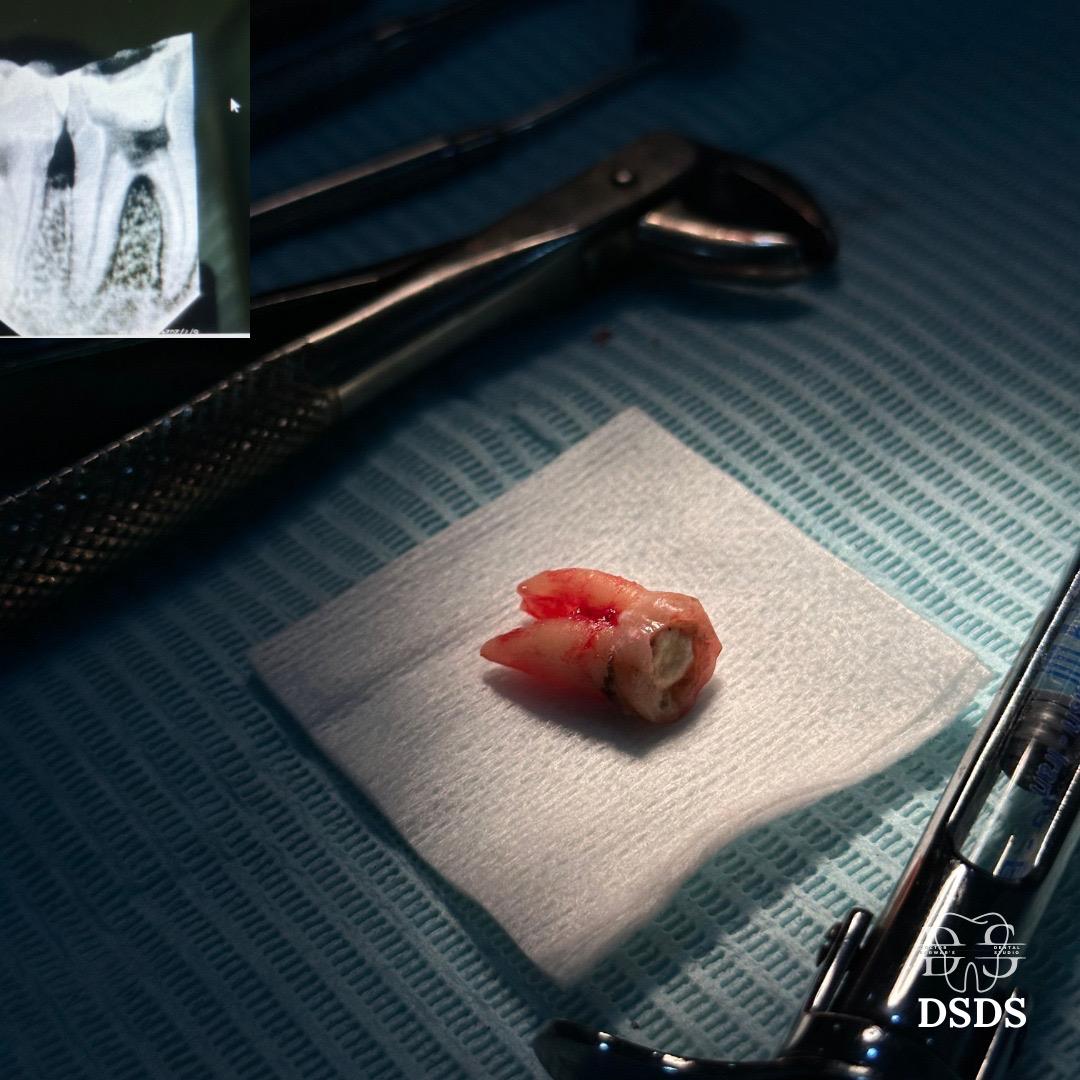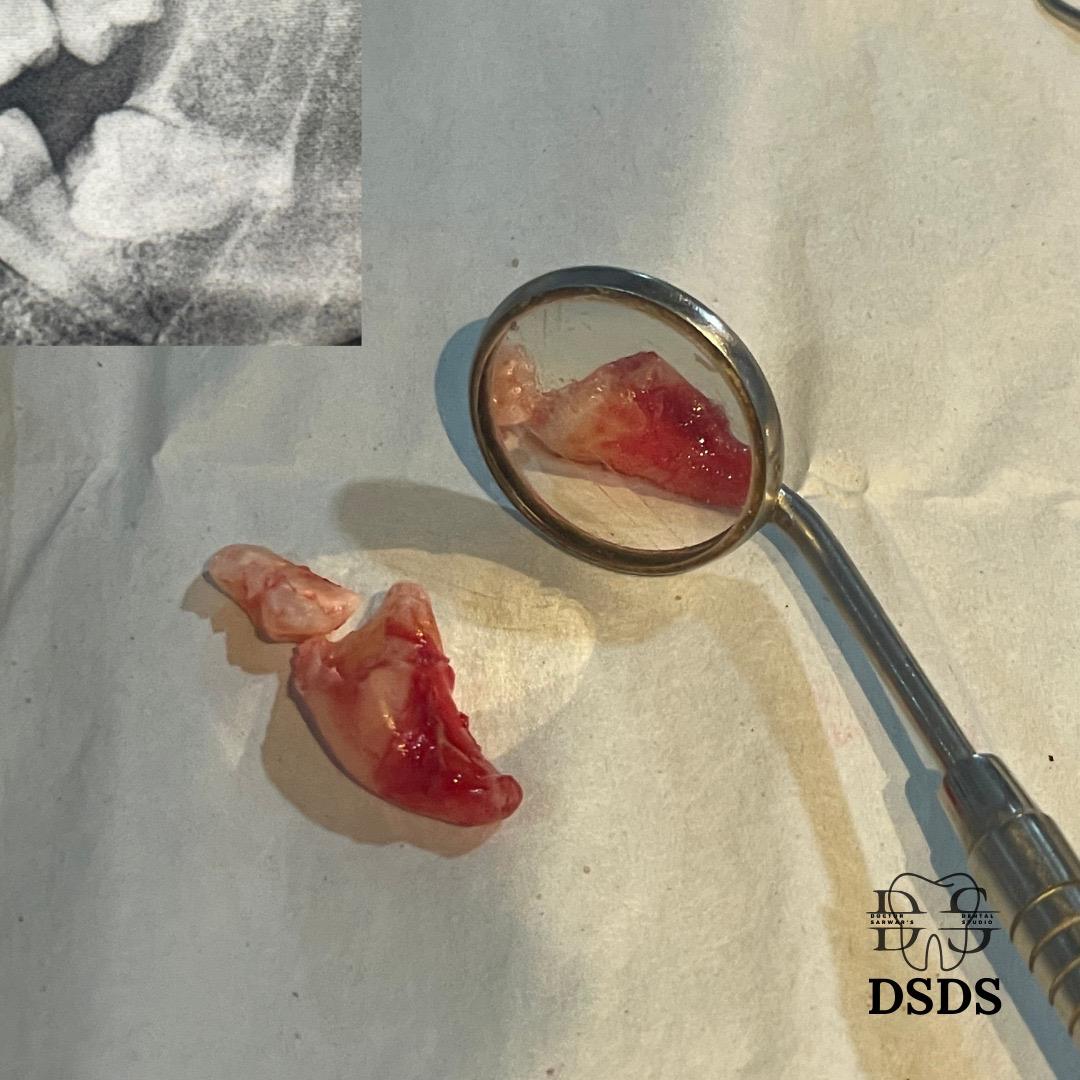

Most active bleeding after a tooth extraction slows within the first few hours, once a firm blood clot settles into the socket. After that, light oozing or a pink, blood-tinged tinge to your saliva for up to 24 hours is completely normal. What is not normal is heavy, bright red blood that keeps soaking through fresh gauze well past that first day. Research into post-extraction healing shows that the large majority of bleeding episodes are minor and stop with simple, firm gauze pressure rather than any clinical procedure. In our clinic, the patients who run into trouble are almost always the ones who couldn't resist rinsing, spitting, or checking the socket every few minutes, which is exactly what disturbs the clot that's trying to form.
How long should bleeding last? The normal timeline
Here's the short version: active, flowing bleeding should taper off within roughly three to four hours, and by 24 hours it should have stopped altogether apart from a faint reddish tinge in your spit. That's the pattern a dentist expects after a routine extraction, and it lines up with patient guidance from NHS oral surgery units across the UK.
It helps to break the first day into stages, because "bleeding" means very different things at hour one and hour twelve.
| Time after extraction | What's normal | What's a red flag |
|---|---|---|
| First 30–60 min | Steady ooze; blood mixes with saliva and looks like more than it is | Gauze fully soaked in under 20 min, repeatedly |
| 1–3 hours | Slowing to a trickle; you change gauze a few times | Bright red flow that won't slow with firm pressure |
| 3–4 hours | Bleeding mostly stopped; clot forming | Still actively flowing despite pressure |
| Up to 24 hours | Pink saliva, occasional spot of blood on the pillow | Fresh red blood pooling in the mouth |
| After 24 hours | Faint blood taste fading; no visible flow | Any renewed steady bleeding |
One detail trips people up constantly: blood mixed with saliva looks dramatic. A few drops of blood tints a whole mouthful of spit pink, so the volume nearly always seems worse than it is. If you're seeing pink-tinged saliva rather than a steady red flow, you're almost certainly fine.
Wisdom teeth and surgical extractions are a slightly different story. A tooth that had to be sectioned or lifted out of bone leaves a larger wound, so expect a bit more oozing and a longer settling period. If you want a fuller picture of what surgical-site recovery looks like, our guide on dry socket signs and how it's treated covers the most common complication that follows a difficult extraction.
Why the socket bleeds in the first place
Pulling a tooth tears a small network of blood vessels in the gum and the bone socket. That's the whole reason it bleeds. Your body's response is to seal the gap with a clot, and that clot is genuinely the hero of this entire story.
Within minutes, platelets and clotting proteins build a soft, jelly-like plug in the socket. Over the next day or two it stabilises, and over the following weeks the body replaces it with granulation tissue and eventually new bone. Everything about good aftercare comes down to one goal: protect that clot while it sets. Disturb it, and you don't just restart bleeding, you also open the door to a painful dry socket where the bone is left exposed.
So when a dentist tells you not to rinse, not to spit, and not to poke the area with your tongue, it isn't fussiness. Each of those actions can physically pull the forming clot out of its socket. The clot is fragile for the first 24 hours in particular, which is why that window gets the strictest instructions.
How to stop bleeding after an extraction at home
The single most effective thing you can do is also the most boring: firm, uninterrupted pressure. Here's the method NHS dental units recommend, and the one we hand to every patient who leaves our chair.
- Make a proper pad. Fold a clean piece of gauze (or a clean cotton handkerchief) into a small, thick square, and dampen it lightly with water. A damp pad sticks to the clot less than a dry one when you remove it.
- Place it directly over the socket — not beside it. The pressure has to land on the wound itself.
- Bite down firmly and hold for a full 20 minutes. Time it on your phone. The most common mistake is peeking after two minutes to see if it's working, which lifts the pad off the clot and resets the clock.
- If it's still bleeding, repeat once with a fresh pad for another 20 minutes.
- Stay upright and keep your head raised, even when resting. Lying flat raises the blood pressure in your head and can keep a socket oozing. Prop yourself on a couple of pillows for the first night.
There's a well-known home trick that genuinely works: a damp black tea bag bitten in place of gauze. Black tea contains tannins, which help the small vessels constrict and the clot firm up. Use ordinary black tea, never herbal or decaffeinated, dampen it, let it cool, and bite on it for 20 to 30 minutes. It's a reasonable backup if you've run out of gauze.
What you should not do matters just as much. For the first 24 hours, don't rinse, don't spit forcefully, don't drink through a straw, don't smoke or vape, and skip alcohol and hot drinks. Every one of those creates suction or pressure that can tear the clot loose. If you've recently had a filling or other dental work and aren't sure what counts as normal afterward, our piece on why a tooth can feel high after a filling walks through another "is this normal?" situation patients ask about constantly.
When should bleeding send you back to the dentist?
Use this guide to judge whether your bleeding is settling normally — then book an in-person check with a qualified dentist near you if anything feels off. Persistent bleeding always deserves a real exam.
What makes bleeding last longer than it should
When a socket keeps oozing past the normal window, there's nearly always a reason, and most of them are things you can influence.
The most common cause we see is simple clot disturbance. Vigorous rinsing, repeated spitting, sucking on a straw, smoking, or just prodding the area with the tongue can all dislodge the plug your body just built. Physical exertion is another: a brisk walk to the bus or a session at the gym raises your blood pressure and can restart a socket that had already settled. This is why dentists ask you to take it genuinely easy for the first day or two, not just out of caution.
Some factors are out of your hands. Larger or surgical extractions bleed a little longer by nature. Certain medical conditions affect clotting, and blood-thinning medications can prolong oozing — more on that below. High blood pressure can keep a socket weeping. And a handful of people simply clot more slowly than average.
One nuance worth being honest about: the evidence on exactly how much each of these factors raises your personal bleeding risk is genuinely mixed, because so much depends on the individual and the tooth involved. One retrospective cohort study of patients on blood thinners found post-extraction bleeding in roughly a quarter of cases, but nearly all of those episodes were mild and stopped with gauze pressure alone. The headline isn't "a quarter of people bleed dangerously" — it's that even in a higher-risk group, serious bleeding is rare and usually controllable.
Blood thinners: the myth that won't die
Should you stop your blood thinner before a tooth extraction? For most people, the answer that's still circulating online is the wrong one.
For decades, patients were told to halt their anticoagulant or antiplatelet medication before dental surgery to reduce bleeding. The current evidence has turned that on its head. UK guidance from the Scottish Dental Clinical Effectiveness Programme, whose second edition was published in March 2022, advises that most people on these medications should not stop them for a simple extraction. The reasoning is stark: the risk of a stroke or a dangerous clot from pausing the medication outweighs the bleeding risk, which can almost always be managed locally in the dental chair.
That "managed locally" part is well supported. A landmark randomised, double-blind trial published in the New England Journal of Medicine on 30 March 1989 showed that a tranexamic acid mouthwash controlled bleeding after oral surgery in anticoagulated patients without any need to alter their medication. Decades of research since have reinforced that local measures — pressure, a clotting sponge placed in the socket, stitches, and antifibrinolytic rinses where needed — keep bleeding under control even when the blood is thinner than normal.
The practical takeaway for you is simple. Never stop a prescribed blood thinner on your own before an extraction. Instead, tell your dentist about it well ahead of the appointment so they can plan. Keep taking the medication as prescribed unless your dentist and the doctor who prescribed it agree otherwise.
When extraction bleeding is an emergency
Most of the time, a worried look at a bloody pillow is just that — a worry, not a crisis. But there are clear signs that mean you should stop managing it at home and get help.
Call your dentist promptly, or seek urgent dental care, if any of these apply:
- Heavy, bright red bleeding that soaks a fresh gauze pad every 20 to 30 minutes despite firm, timed pressure.
- Bleeding that's still actively flowing after you've done two full rounds of 20-minute gauze pressure.
- Large, fast-forming clots that you keep having to clear from your mouth.
- You feel faint, dizzy, or unusually weak — possible signs you've lost more blood than is comfortable.
- Bleeding that restarts and escalates after seeming to stop, especially alongside increasing pain or swelling.
And a smaller set of signs point to a genuine emergency that needs same-day or A&E attention rather than a routine call: swelling that's spreading rapidly and starting to affect your ability to swallow or breathe, swelling pushing toward the eye, or bleeding you simply cannot slow at all. These are uncommon, but they're the situations where waiting is the wrong choice. Our guide on when facial swelling from a tooth is an emergency breaks down those escalation signs in more detail.
A dentist may need to clean the socket, place or replace a clotting material, add a stitch, or apply an antifibrinolytic agent to settle a stubborn bleed. None of that is dramatic — it's routine chairside work — but it does need a clinician's hands, which is exactly why persistent bleeding isn't something to keep wrestling with alone at midnight.
Bleeding vs other things you might notice
In the days after an extraction, "bleeding" gets blamed for a lot of things that aren't actually active bleeding. Sorting them out saves a lot of panic.
A faint metallic or blood-like taste for a day or two is normal as the socket settles, and a small amount of blood in your saliva can linger and tint your spit pink without meaning anything is wrong. That's different from a steady red flow. If a blood or metallic taste is something you notice often and unrelated to a recent extraction, our article on dental causes of a metallic taste in the mouth covers the other usual suspects.
Pain is its own signal. A normal extraction tends to hurt most around day three, then ease. If instead your pain spikes upward around day three to five, often with a foul taste or smell and an empty-looking socket, that pattern points toward dry socket rather than a bleeding problem. The two get confused because both show up "a few days later," but the fix is completely different.
Then there's bruising. Some people develop a yellow-purple bruise on the jaw or cheek after an extraction, which can look alarming and has nothing to do with how the socket itself is healing. It fades over a week or two on its own.
The one habit that protects your clot
If you remember nothing else, remember this: leave the socket alone. The clot does the work, and your only job for the first 24 hours is to not interfere with it. No rinsing, no spitting, no straws, no smoking, no prodding — just firm pressure if it oozes, an upright head, and patience. After the first day, gentle warm salt-water rinses help keep the area clean while the deeper healing carries on for weeks. A tooth that's been removed for decay or damage often raises the question of what comes next, and if that's on your mind, our tooth replacement options and dental implant pages are a sensible place to look once the socket has healed. For now, the win is simple: protect the clot, watch for the handful of warning signs above, and let your body do what it's very good at.
Frequently asked questions
How long is it normal to bleed after a tooth extraction?
Active bleeding usually slows within the first few hours, once a stable clot forms in the socket. Light oozing or blood-tinged saliva for up to 24 hours is normal. Heavy, bright red bleeding that soaks gauze beyond this window should be checked by a dentist.
How do I stop bleeding after a tooth extraction at home?
Fold a clean, damp gauze pad, place it over the socket, and bite firm, steady pressure for 20 minutes without checking. Repeat once if needed. Keep your head raised, stay calm, and avoid rinsing, spitting, or smoking, which can dislodge the clot and restart bleeding.
Why is my extraction site still bleeding after 24 hours?
Bleeding past 24 hours often means the clot was disturbed by rinsing, spitting, smoking, or activity, or that a blood-thinning medication or a tissue issue is involved. Apply firm gauze pressure and contact your dentist, since persistent bleeding usually needs an in-person check.
Can I use a tea bag to stop extraction bleeding?
Yes. A damp, cooled black tea bag bitten in place of gauze can help, because the tannins encourage the small vessels to contract. Use ordinary black tea, not herbal or decaffeinated, and bite firmly for about 20 to 30 minutes.
Does blood thinner medication make extraction bleeding worse?
It can prolong oozing, but current UK guidance advises most people should not stop anticoagulants or antiplatelets for a simple extraction, as the stroke or clot risk outweighs the bleeding. Tell your dentist beforehand so they can plan local measures to control it.
When is bleeding after an extraction an emergency?
Seek urgent care if bleeding is heavy and soaks fresh gauze every 20 to 30 minutes despite firm pressure, if you feel faint or dizzy, or if blood is pooling fast. Large rapidly worsening swelling affecting swallowing or breathing needs emergency attention.
Is it normal to taste blood for days after an extraction?
A faint metallic or blood taste for a day or two is common as the socket settles. A taste that worsens after day three, especially with a foul smell, increasing pain, or no clot visible, can suggest infection or dry socket and should be assessed by a dentist.
Not sure your recovery is on track?
When bleeding, pain, or swelling doesn't follow the normal pattern, an in-person exam is the only way to know for sure. Find a qualified dentist near you and get it checked.
References
- Sindet-Pedersen S, Ramström G, Bernvil S, Blombäck M. Hemostatic effect of tranexamic acid mouthwash in anticoagulant-treated patients undergoing oral surgery. New England Journal of Medicine. 1989 Mar 30;320(13):840–843. doi:10.1056/NEJM198903303201305.
- Scottish Dental Clinical Effectiveness Programme (SDCEP). Management of Dental Patients Taking Anticoagulants or Antiplatelet Drugs. 2nd edition. Published March 2022. Available at: https://www.sdcep.org.uk/published-guidance/anticoagulants-and-antiplatelets/
- Iwata E, Tachibana A, Kusumoto J, Hasegawa T, Kadoya R, Enomoto Y, Takata N, Akashi M. Risk factors associated with post-extraction bleeding in patients on warfarin or direct-acting oral anticoagulants: a retrospective cohort study. Oral and Maxillofacial Surgery. 2022 Dec;26(4):641–648. Epub 2022 Jan 19. doi:10.1007/s10006-022-01039-0.
- University College London Hospitals NHS Foundation Trust. Dental extractions: post-operative instructions. Available at: https://www.uclh.nhs.uk/patients-and-visitors/patient-information-pages/dental-extractions-post-operative-instructions (accessed June 2026).
- Guy's and St Thomas' NHS Foundation Trust. Dental surgery and recovery. Available at: https://www.guysandstthomas.nhs.uk/health-information/dental-surgery-and-recovery (accessed June 2026).
- Cleveland Clinic. Tooth Extraction: Procedure, Aftercare & Recovery. Last reviewed 19 December 2025. Available at: https://my.clevelandclinic.org/health/treatments/22120-tooth-extraction

Dr. Sarwar Naseer
A PMDC-registered dental surgeon known for gentle, comfort-focused care and aesthetic dentistry, with a particular interest in helping anxious patients through extractions and recovery.
View full profile →
Dr. Uzair Ahmed
A prosthodontist with 12+ years in restorative and prosthetic dentistry in Lahore, focused on rebuilding function and aesthetics after tooth loss and complex dental work.
View full profile →