Porcelain veneers last longer, resist stains, and look the most natural, while composite veneers cost less, are completed in a single visit, and remove little or no tooth. Research puts porcelain veneer survival at around 95% over ten years, compared with roughly 88% for composite. Neither is universally "better" — porcelain wins on longevity and looks, composite wins on cost, speed, and how little tooth it sacrifices. The right choice comes down to your goals, your budget, and how much of your natural enamel you want to keep.
The quick comparison
Here is the whole decision on one screen. The sections below explain the reasoning behind each row.
| Composite veneers | Porcelain veneers | |
|---|---|---|
| Material | Tooth-coloured resin, built on the tooth | Lab-made ceramic shells |
| Visits | Usually one | Two (prep, then fit) |
| Tooth removed | Little or none | A thin layer of enamel |
| Typical lifespan | 5–10 years | 10–15 years or more |
| Stain resistance | Lower — can dull over time | High — glazed surface |
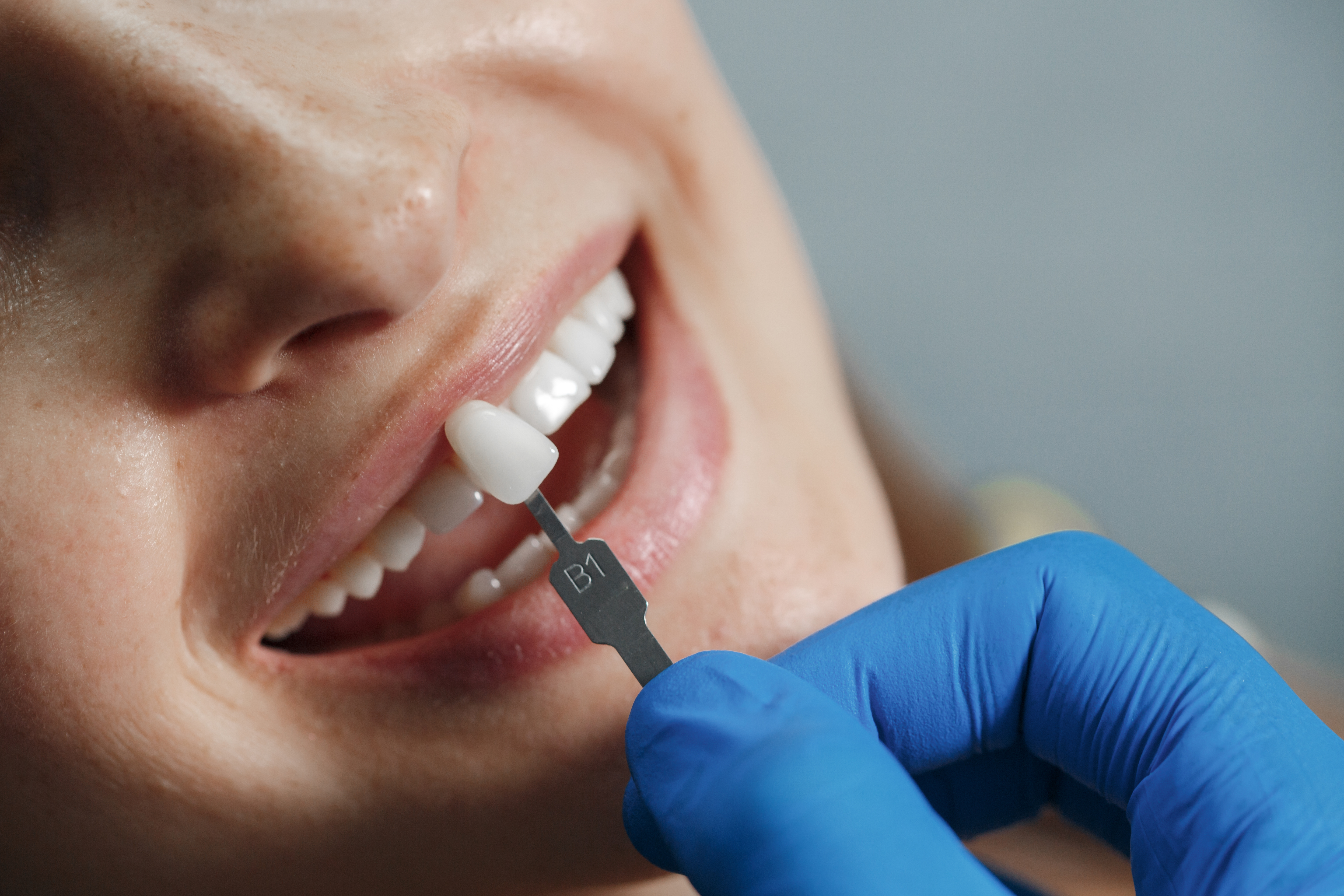
| Natural look | Very good | Best (most lifelike translucency) |
| Repairs | Easy, often chairside | Usually means replacing the veneer |
| Upfront cost | Lower (often ~30–50% less) | Higher |
How each one is actually made
The materials lead to two completely different processes, and understanding them explains nearly every other difference between the two.
Composite veneers are sculpted directly onto your teeth in the chair. The dentist applies a tooth-coloured resin — a refined version of the same material used for white fillings — in thin layers, shaping and hardening each one with a curing light, then polishing the result to a shine. It is an artistic, freehand process done in a single appointment, with no laboratory and no waiting. Because so little is changed on the tooth beneath, it is often the more conservative starting point.
Porcelain veneers take a different route. At the first visit, the dentist removes a wafer-thin layer of enamel to make room, takes an impression or digital scan, and fits temporary veneers. A dental laboratory then crafts custom ceramic shells — layered and glazed to mimic real enamel — which are bonded on at a second visit a week or two later. The extra step and the lab artistry are a large part of why porcelain costs more and looks the way it does. The full process is on our veneers page.
One practical consequence falls straight out of this: composite is repairable in minutes because it is added material the dentist can re-bond and reshape, whereas a chipped porcelain veneer usually has to be remade. That single fact shapes a lot of the long-term experience.
How long does each last?
This is where the evidence is genuinely useful, because veneers are one of the better-studied cosmetic treatments.
A systematic review of porcelain laminate veneers reported an estimated 10-year cumulative survival of about 95.5%, with the main reasons for failure being debonding and fracture rather than the porcelain wearing out. Composite holds up respectably but not quite as well: a 2023 systematic review and meta-analysis estimated overall survival of roughly 88%, splitting into about 91% for direct (chairside) composite and 84% for indirect (lab-made) composite. Translated into planning terms, porcelain commonly lasts 10 to 15 years or longer, while composite often needs refreshing, repair, or replacement somewhere in the 5 to 10 year range.
But here's the part that matters more than the headline numbers: the single biggest driver of how long any veneer lasts isn't the material — it's the force going through it. Heavy bite, nail-biting, chewing ice, using teeth as tools, and especially grinding will shorten the life of either type. In our clinic, the veneers that fail early almost always belong to people who grind at night, regardless of which material they chose. No clinician can responsibly promise an exact lifespan, and anyone who does is guessing.
Which looks more natural?
If a flawless, light-catching result is the priority, porcelain has the edge — and it comes down to physics, not just craftsmanship.
Natural enamel is slightly translucent; light passes a short way into the tooth before bouncing back, which is what gives real teeth their depth rather than a flat, painted look. Porcelain is layered and glazed to reproduce that translucency closely, which is why a well-made porcelain veneer can be almost impossible to distinguish from a natural tooth. Its glazed surface also stays bright, because it doesn't absorb the pigments from coffee, tea, red wine, or tobacco.
Does that make composite second-rate? Not at all — in skilled hands, composite produces beautiful results, particularly for smaller changes like closing a gap or repairing a chipped edge. Its limitations are that it is a touch more opaque, so it can read very slightly flatter, and being marginally porous, it tends to dull or pick up staining over a few years, especially along the margins. A polish can revive it, but it asks for a little more upkeep. If the issue is only colour rather than shape, it's worth asking whether teeth whitening alone would get you there before committing to either veneer.
Which veneer fits your smile goals?
The best material depends on your enamel, your bite, and how much upkeep you want. Use this guide, then see a qualified cosmetic dentist near you for a tailored plan.
The irreversible part: how much tooth comes off
This is the trade-off most clinics underplay, and as a prosthodontist it's the one I make sure every patient understands before they choose.
Composite veneers usually need little or no enamel removed. That means they are often reversible — if you don't like the result, the composite can frequently be taken off and the tooth left much as it was. Porcelain is different. To seat those shells and keep them from looking bulky, the dentist removes a thin layer of enamel, and enamel does not grow back. Once a tooth has been prepared for porcelain, it will need a veneer or a crown on it for the rest of its life. That's not a reason to avoid porcelain — it's a routine, well-established treatment — but it is a permanent decision dressed up as a cosmetic one, and you deserve to know that going in.
This is also where a popular myth needs correcting. You'll see claims online that "veneers don't touch your teeth." That can be broadly true for minimal-prep composite, but for conventional porcelain it is simply wrong. Some teeth do need preparing, and pretending otherwise sets people up for a surprise. A good consultation will tell you exactly how much, if any, enamel your specific case requires — sometimes very little, sometimes more, depending on the position and shape of your teeth.
Cost: cheaper now vs cheaper over time
Budget decides a lot of veneer choices, and it should — but the sticker price only tells half the story.
Upfront, composite is clearly the cheaper option, often in the region of 30 to 50% less per tooth than porcelain. For a single chipped tooth, a gap, or someone wanting an affordable refresh, that lower entry cost is a real advantage, and the result can be excellent. There's no shame in choosing the option that fits your budget today.
Over a longer horizon, though, the maths can shift. Because porcelain typically lasts longer and resists staining and chipping, it may go many years with little intervention, while composite might be repaired, re-polished, or replaced more often across the same period. So the "cost per year" can end up closer than the headline prices suggest. Which framing matters more depends entirely on you: are you optimising for the cheapest start, or the lowest cost over fifteen years? Both are legitimate. One honest caveat — actual prices vary enormously by country, clinic, and case, so any specific figure you read online is a rough guide, never a quote for your mouth.
Which should you choose?
Rather than declare a winner, it's more useful to match the material to the situation. A few patterns I see often:
| If you… | Often a better fit | Why |
|---|---|---|
| Want the most natural, longest-lasting result | Porcelain | Best translucency, stain resistance, and longevity |
| Are on a tighter budget or want one visit | Composite | Lower cost, same-day, easy to adjust |
| Want to keep the option to change your mind | Composite | Minimal tooth removal, more reversible |
| Are fixing one chip or a small gap | Composite | Quick, conservative, repairable |
| Want a full, lasting smile makeover | Porcelain | Holds colour and shape across many teeth for years |
| Want to "trial" a new smile first | Composite, then porcelain later | Test the look before a permanent change |
Whichever you lean toward, two things must be true first: healthy gums and sound teeth underneath. Veneers placed over inflamed gums or active decay are built on sand. If your gums bleed or feel tender, that needs sorting before any cosmetic work — our guide on gum pain when the tooth looks fine explains why gum health comes first. It's also normal for teeth to feel briefly sensitive after either procedure, since the enamel is etched to bond the veneer; if you're already prone to sensitivity, our piece on sharp versus lingering sensitivity is worth a read.
Before you book either
Veneers are elective, and the best cosmetic dentistry starts by asking whether you need them at all. If your only complaint is colour, whitening may be enough. If teeth are crooked, sometimes straightening them looks better — and removes less tooth — than masking the position with veneers. And if a tooth is heavily broken down or root-treated, it may need a crown rather than a veneer to protect it properly. Good treatment fits the problem; it doesn't default to the most expensive shell.
The one expectation to set straight is permanence. No veneer lasts forever, in either material. Think of them as a long-term restoration you look after and eventually renew, not a one-and-done fix — and remember that for porcelain, the tooth underneath has been changed for good. Go in with clear eyes about all of that, choose the material that matches your real priorities, and a veneer can be one of the most satisfying things dentistry does. Just make the decision with the full picture, not the brochure version.
Once they're on, looking after veneers isn't complicated, and the habits help both materials. Brush twice a day with a non-abrasive toothpaste and a soft brush, clean between the teeth daily, and ease off the things that wear or stain them — biting nails, chewing ice, opening packets with your teeth, and a heavy coffee, tea, or red-wine habit. If you grind at night, a night guard is not optional; it is the single best thing you can do to protect the investment, because grinding forces are what crack veneers more than anything else. Keep up your regular check-ups, and a small chip or lifting edge gets caught while it's still an easy fix rather than a remake.
Frequently asked questions
Are porcelain or composite veneers better?
Neither is universally better. Porcelain lasts longer, resists stains, and looks the most natural, but costs more and removes some tooth. Composite is cheaper, done in one visit, removes little or no tooth, and is easy to repair, but it stains more and needs replacing sooner. The right choice depends on your goals and budget.
How long do composite and porcelain veneers last?
Research puts porcelain veneer 10-year survival at around 95%, with most lasting 10 to 15 years or longer. Composite veneers survive at about 88% in pooled studies and typically last 5 to 10 years before needing repair or replacement. Your bite, grinding habits and care matter as much as the material.
Do veneers ruin your teeth?
Porcelain veneers usually require removing a thin layer of enamel, which does not grow back, so those teeth will always need veneers or crowns afterwards. Composite veneers often need little or no enamel removal and can be more reversible. Neither ruins healthy teeth when planned and maintained well.
Which veneer is cheaper?
Composite veneers cost significantly less upfront, typically around 30 to 50% less per tooth than porcelain. However, because porcelain lasts longer and needs fewer repairs, the cost over many years can even out. Prices vary widely by country and clinic, so any figure online is only a rough guide.
Do composite veneers stain?
Yes, more than porcelain. Composite resin is slightly porous, so coffee, tea, red wine, and smoking can dull or discolour it over a few years, especially at the edges. Porcelain is glazed and highly stain-resistant. Re-polishing can refresh composite, and good habits slow staining for both.
Can you switch from composite to porcelain veneers later?
Yes. Many people start with composite and upgrade to porcelain later. Because composite removes little tooth, it can be a good way to trial a new smile before committing to porcelain. Your dentist removes the composite and prepares the tooth for the porcelain veneer when you are ready.
Are veneers permanent?
No veneer lasts forever. All veneers eventually need repair or replacement, and porcelain involves an irreversible change to the tooth even though the veneer itself is replaceable. Think of veneers as a long-term restoration you maintain over time, not a one-off permanent fix.
Get the full picture before you commit
Veneers are a long-term decision, especially porcelain. Have a qualified cosmetic dentist near you assess your teeth and talk through both materials honestly.
References
- Layton, D. M., & Clarke, M. (2013). A systematic review and meta-analysis of the survival of feldspathic porcelain veneers over 5 and 10 years. International Journal of Prosthodontics, 26(2), 111–124.
- Morimoto, S., Albanesi, R. B., Sesma, N., Agra, C. M., & Braga, M. M. (2016). Main clinical outcomes of feldspathic porcelain and glass-ceramic laminate veneers: a systematic review and meta-analysis of survival and complication rates. International Journal of Prosthodontics, 29(1), 38–49.
- Vichi, A., et al. (2023). Survival and clinical performance of resin composite laminate veneers: a systematic review and meta-analysis (direct vs. indirect). Journal of Dentistry / Clinical Oral Investigations.
- American Dental Association (ADA). Veneers — patient information. MouthHealthy / ada.org.
- Oral Health Foundation. Veneers — what they are, materials and care. dentalhealth.org.
- National Health Service (NHS). Veneers — cosmetic dental treatment overview. nhs.uk.

Dr. Uzair Ahmed
A prosthodontist with 12+ years in restorative and prosthetic dentistry, Dr. Uzair plans veneers, crowns, and full smile reconstructions at Dental Specialists in Lahore.
View full profile →
Dr. Sarwar Naseer
Known for gentle care and aesthetic dentistry including smile makeovers, Dr. Sarwar reviews clinical content at Dental Specialists for accuracy and patient clarity.
View full profile →