For mild crowding and front-tooth alignment, clear aligners work about as well as braces and win on comfort and appearance. For complex problems — big bite corrections, rotating teeth, or moving roots — braces are generally more effective. Neither is simply "better." The right choice depends on what your teeth actually need, how disciplined you can be about wearing trays, and your budget. Both can give an excellent result, and both only work properly with a qualified dentist or orthodontist guiding the process and a retainer holding it afterward.
The quick comparison
The whole decision, on one screen. Everything after this explains the reasoning.
| Fixed braces | Clear aligners | |
|---|---|---|
| How they work | Brackets and wires fixed to teeth | Series of removable clear trays |
| Best for | All cases, including complex ones | Mild to moderate cases |
| Visibility | Noticeable (ceramic less so) | Nearly invisible |
| Comfort | Brackets can rub; sore after adjustments | Generally more comfortable |
| Removable | No — fixed on | Yes — for eating and cleaning |
| Relies on willpower | No — always working | Yes — must wear 20–22 hrs/day |
| Food restrictions | Yes (hard, sticky foods) | None (removed to eat) |
| Cleaning | Harder around brackets | Easier (take them out) |
How each one moves your teeth
Both do the same fundamental job — applying gentle, sustained pressure that coaxes teeth through bone into new positions — but they go about it very differently.
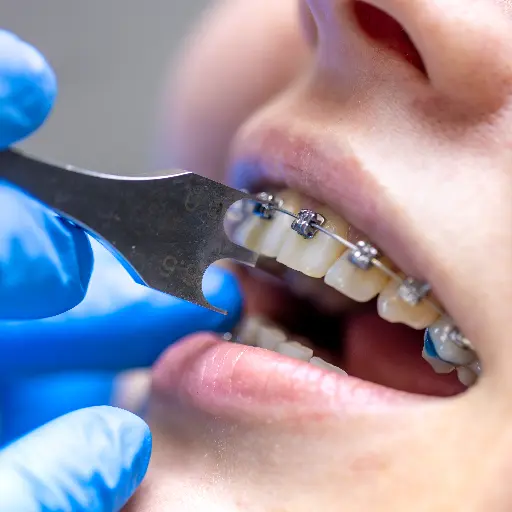
Fixed braces bond a small bracket to each tooth and thread a wire through them. As the dentist adjusts and changes that wire over months, it pulls and rotates the teeth with a degree of three-dimensional control that has been refined over more than a century. Brackets can also carry attachments like elastics for bigger corrections. The wire never stops working, which is both their strength and the reason they feel tight after each tightening.
Clear aligners take a different path. A scan of your mouth is used to plan the entire journey on a computer, then a sequence of custom plastic trays is made, each one slightly different from the last. You wear each tray for a week or two, and it nudges the teeth a fraction of a millimetre before you swap to the next. Small tooth-coloured bumps called attachments are often bonded to certain teeth to give the trays something to push against for trickier movements. You can see the options we offer on our braces and aligners page.
Which actually works better?
Here is the question everyone wants answered, and the honest version is more interesting than a simple winner.
For mild cases — minor crowding, small gaps, straightening the front teeth — the evidence is reassuring. A randomised trial found clear aligners and fixed braces equally effective for mild lower-front crowding, and other studies report comparable results for straightforward cases. If your issue is cosmetic and limited, aligners are a genuinely viable, evidence-backed choice.
The picture changes for complex problems. A systematic review comparing the two found that clear aligners may fall short of braces in several specific areas: achieving solid contacts between upper and lower teeth, controlling tooth "torque" (the precise angle and root position), widening the arch, and holding the result. In plainer terms, when teeth need big rotations, roots need repositioning, or the bite needs substantial correction, braces still have the edge. This is exactly where a lot of online marketing oversells — the claim that "aligners can fix anything now" runs ahead of what the evidence reliably shows.
So the fair summary is this: aligners have closed the gap impressively for simple-to-moderate cases, but braces remain the more dependable tool for the hard ones. Which camp you fall into isn't something you can judge from the mirror — it takes an examination, and sometimes X-rays, to know. And a quick myth to retire while we're here: braces are not "outdated." For complex orthodontics they're still the reference standard, not a fallback.
As a rough guide to where each tends to shine: aligners are often well suited to mild spacing, minor crowding, and relapse after previous treatment, where the movements are small and mostly cosmetic. Braces more often earn their place with severe crowding, significant overbites or underbites, teeth that need rotating or uprighting, and cases needing elastics or other attachments for bigger skeletal-level correction. These aren't hard rules — an experienced clinician stretches what aligners can do, and modern attachments help — but they capture the pattern we see most often in practice.
Comfort, hygiene, and daily life
If effectiveness leans toward braces for hard cases, the day-to-day experience leans clearly toward aligners — and for many people that genuinely matters.
Comfort is the first win. Studies consistently show aligners cause less discomfort than braces, especially in the first week, because there are no brackets or wire ends to rub raw spots into your cheeks and lips. You'll still feel pressure and tenderness for a day or two with each new tray, but that's the teeth moving, and it settles quickly. Then there's the invisibility, which is the whole reason many adults consider treatment at all — you can straighten your teeth through a work presentation or a wedding photo without a mouthful of metal.
The bigger health advantage, in my view, is hygiene. You take aligners out to brush and floss, so you clean your teeth normally, whereas brushing around fixed brackets is fiddly and plaque builds up easily in the nooks. That plaque is why braces wearers who don't clean meticulously can finish treatment with straight but inflamed gums, or white marks on the enamel. Crowded or hard-to-clean teeth are a known driver of gum problems and even receding gums, so anything that makes cleaning easier is a real plus. Whichever you choose, healthy gums come first — if yours bleed or feel sore, that needs settling before treatment starts, and a professional scaling and polishing is often part of getting there.
Eating is the other practical difference. With aligners out, you eat whatever you like; with braces, hard and sticky foods are off the menu for the duration, because they snap brackets and bend wires. Small thing day to day, but a year or two is a long time to avoid popcorn and toffee.
Braces or aligners — which is right for you?
Only an exam can tell whether your case suits aligners or needs braces. Use this guide, then see a qualified dentist or orthodontist near you for a proper assessment.
The compliance catch with aligners
Aligners come with one condition that braces don't, and it makes or breaks the whole treatment: you have to actually wear them.
The trays only move teeth while they're in your mouth, and the target is 20 to 22 hours a day — essentially everything except eating and cleaning. Take them out for long lunches, forget to put them back, leave them in a napkin too often, and the teeth fall behind the plan, the trays stop fitting, and treatment drags or stalls. Braces sidestep this entirely: they're glued on, so they keep working whether you're motivated or not. If you know yourself to be forgetful, that's not a small footnote — it's a genuine reason braces might serve you better, however much you like the idea of aligners.
Treatment time and cost
How long will it take, and what will it cost? Both answers are frustratingly the same: it depends on the case, not the appliance.
For simple problems, aligner treatment can finish quickly — sometimes well under a year — while a complex case may take a similar length to braces or longer. Braces have the quiet advantage of working continuously, so they don't lose time to missed wear. Anyone quoting you a fixed timeline before examining your teeth is guessing, because the distance your teeth need to travel is what sets the clock, not the brand on the box.
Cost works the same way. Prices vary enormously by case complexity, country, and clinic, and aligners and braces often land in overlapping ranges depending on how much work is involved. Simple aligner cases can be very affordable; full-arch aligner treatment for a complex bite can cost as much as or more than braces. I'd treat any specific figure you see online as a rough guide only — the honest number for your mouth comes from a consultation, not a comparison chart. And whatever the headline price, factor in retainers afterward, because they're not optional.
The retainer truth nobody warns you about
Here's the part that surprises people most, and it applies equally to braces and aligners: straightening your teeth is not permanent on its own.
Teeth have a natural tendency to drift, and after treatment they will gently try to migrate back toward where they started — a process called relapse. The only thing that holds your new smile in place is a retainer, worn as directed, often nightly for the long term. Skip it for a few months and you can watch months of treatment quietly unravel. I've seen patients who did everything right for eighteen months, then stopped wearing their retainer, and within a year or two the crowding crept back. This isn't a failure of the treatment; it's simply how teeth behave. So when you're weighing braces against aligners, weigh in the retainer too — it's part of the deal with both, for life if you want the result to last.
A serious warning about DIY aligners
One thing I won't soft-pedal: be very careful with mail-order, direct-to-consumer aligners that promise to straighten your teeth from home with no in-person visit.
The American Dental Association and the American Association of Orthodontists have both issued warnings about these services, and the concern is straightforward. Moving teeth is a medical treatment, not a mail-order product. Done without an in-person examination, X-rays, and ongoing supervision, there's no way to know whether your gums and bone are healthy enough to move teeth at all, or to catch problems while they're fixable. A 2023 review of direct-to-consumer aligners found documented adverse events including bite problems, pain, sensitivity, and gum disease — and some of those outcomes were irreversible. The collapse of one large mail-order company in 2023, which left patients mid-treatment with no support, made the risk concrete for thousands of people.
None of that means aligners are bad — professionally supervised aligners are excellent. It means the supervision is the safety feature, and skipping it to save money is a gamble with your teeth. Before anyone moves your teeth, your mouth should be examined, your gums checked, and a real dentist or orthodontist should own the plan and watch it unfold.
If you take one thing from all of this: the appliance matters less than the diagnosis behind it. Choose the option that fits your actual case and your honest discipline, keep a qualified professional in the loop from exam to retainer, and either braces or aligners can give you a result you'll be glad you committed to.
Frequently asked questions
Are clear aligners as good as braces?
For mild crowding and front-tooth alignment, research shows clear aligners work about as well as braces. For complex cases — large bite corrections, rotations, and moving roots — braces are generally more effective. The best option depends on what your teeth actually need, which only an exam can determine.
Do braces work faster than clear aligners?
It depends on the case, not the appliance. Simple aligner cases can finish quickly, sometimes in well under a year, while complex problems may take similar time to braces or longer. Braces also keep working without relying on you to wear them, so poor aligner compliance can slow things considerably.
Are clear aligners more comfortable than braces?
Generally yes. Studies show aligners cause less discomfort, especially in the first week, because there are no brackets or wires to rub the cheeks and lips. Both feel tight and tender for a day or two after each adjustment or new tray, which is the teeth moving as intended.
Can you eat with clear aligners?
You remove aligners to eat, so there are no food restrictions — a real advantage over braces, where hard and sticky foods are off-limits. The trade-off is discipline: aligners must be worn 20 to 22 hours a day and put straight back in after meals, or the teeth simply will not move on schedule.
Do you need a retainer after braces or aligners?
Yes, with both. Teeth naturally drift over time, so without a retainer they tend to relapse toward their old positions. Retainers are not optional extras; they are how you keep the result. Many people wear them nightly long-term to hold their teeth where treatment moved them.
Are mail-order or DIY aligners safe?
Dental bodies including the ADA and AAO warn against direct-to-consumer aligners that skip an in-person exam and supervision. Research links them to bite problems, pain, sensitivity, and gum disease, sometimes irreversible. Moving teeth is a medical treatment that needs X-rays, a healthy mouth, and professional monitoring.
Can adults get braces or aligners?
Absolutely — age is rarely a barrier. Both work well for adults, though gum disease or bone loss must be controlled first, since teeth should only be moved through healthy supporting tissue. Many adults choose aligners for discretion, but the right option still depends on the complexity of the case.
Straighten your teeth the safe way
Skip the DIY kits. Have a qualified dentist or orthodontist near you examine your mouth and supervise treatment from the first scan to the final retainer.
References
- Ke, Y., Zhu, Y., & Zhu, M. (2019). A comparison of treatment effectiveness between clear aligner and fixed appliance therapies. BMC Oral Health, 19, 24.
- Hennessy, J., Garvey, T., & Al-Awadhi, E. A. (2016). A randomized clinical trial comparing mandibular incisor proclination produced by fixed labial appliances and clear aligners. Angle Orthodontist, 86(5), 706–712.
- Rossini, G., Parrini, S., Castroflorio, T., Deregibus, A., & Debernardi, C. L. (2015). Efficacy of clear aligners in controlling orthodontic tooth movement: a systematic review. Angle Orthodontist, 85(5), 881–889.
- American Association of Orthodontists (AAO). Consumer alert: the risks of direct-to-consumer (mail-order) orthodontic treatment. aaoinfo.org.
- American Dental Association (ADA). Statement on direct-to-consumer orthodontic (clear aligner) services. ada.org.
- National Health Service (NHS). Orthodontics — braces and teeth straightening. nhs.uk/conditions/orthodontics.

Dr. Sarwar Naseer
Known for gentle, comfortable care and aesthetic dentistry, Dr. Sarwar guides patients through smile makeovers and straightening options at Dental Specialists in Lahore.
View full profile →
Dr. Uzair Ahmed
With 12+ years in restorative and prosthetic dentistry, Dr. Uzair plans complex smile cases and reviews clinical content at Dental Specialists for accuracy.
View full profile →